
The Platform
Staffing moves faster when governed AI takes the busywork, and a person still makes the call.
One platform, built on a governed data foundation, clears the routine work so your team fills faster, closes compliance gaps, and spends its hours on clients and workers. Every consequential decision still belongs to a named human.
What you gain
Faster fills
Governed AI takes the routine work off the desk, so placements close sooner.
Fewer compliance gaps
Credential and eligibility rules live in the data, so work stays inside the lines.
Hours back on relationships
Less time reconciling systems means more time with clients and workers.
A record that holds up
Every consequential decision is logged, queryable, and overridable.
Two products, one foundation
The app every human meets.
One product, on phone and web. What you see follows your role and context, not your device. It is built to be useful before it is transactional, worth opening even when there is no work.
Phone and web
One app, every device.
The same product, the same data, the same governance, whether it opens on a phone between shifts or on the web for longer work. What you see follows your role, not your screen.
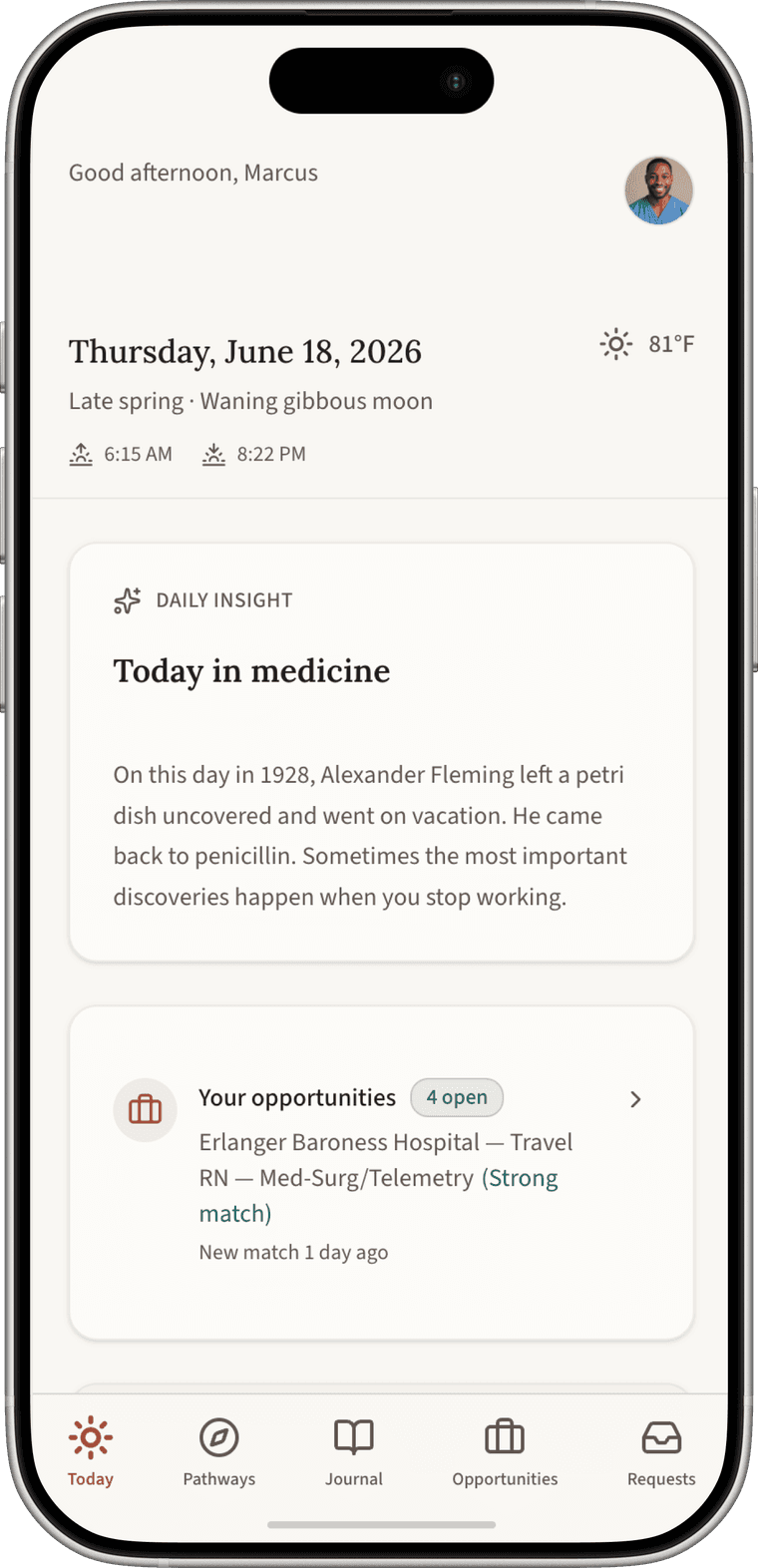
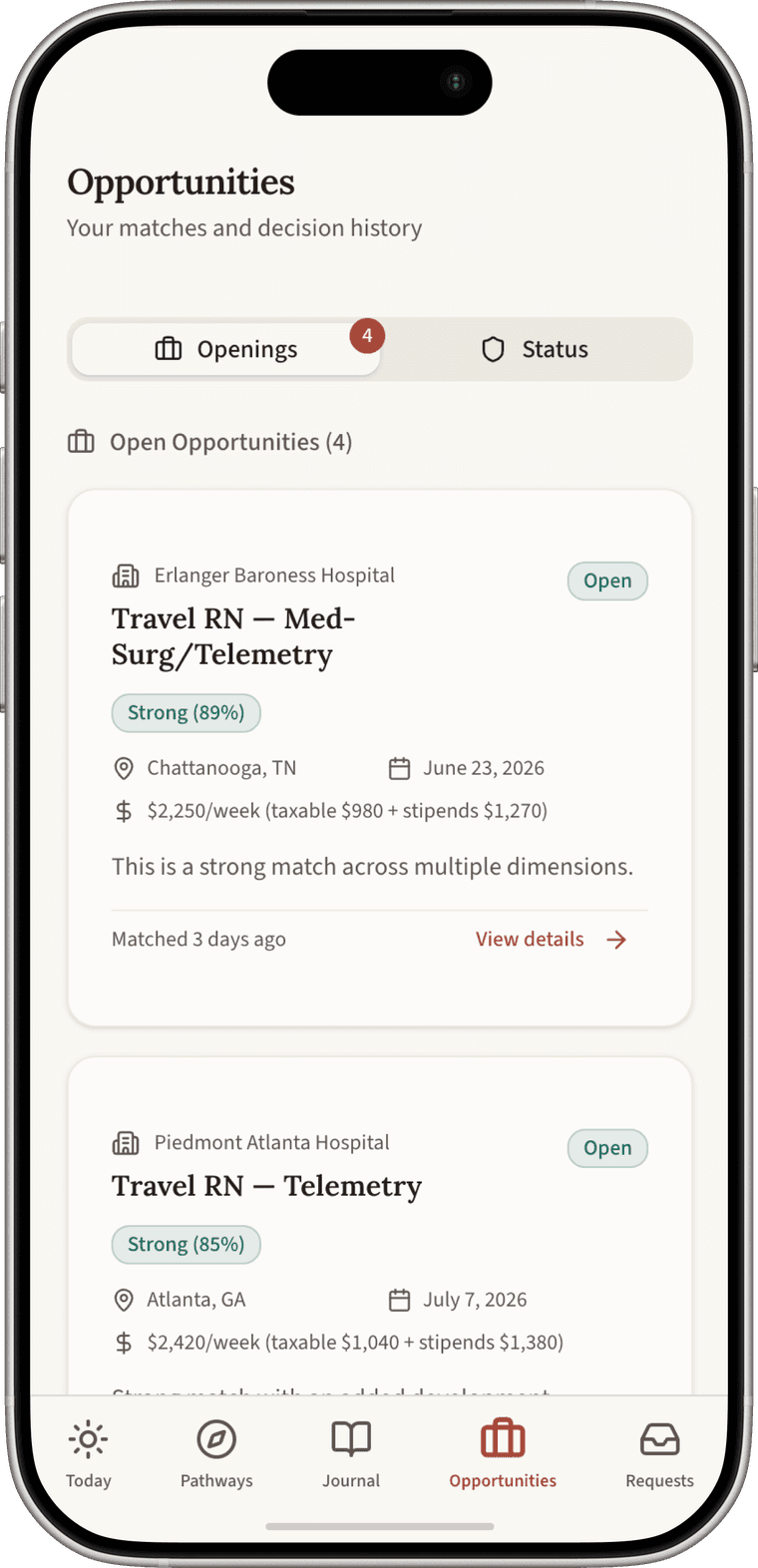
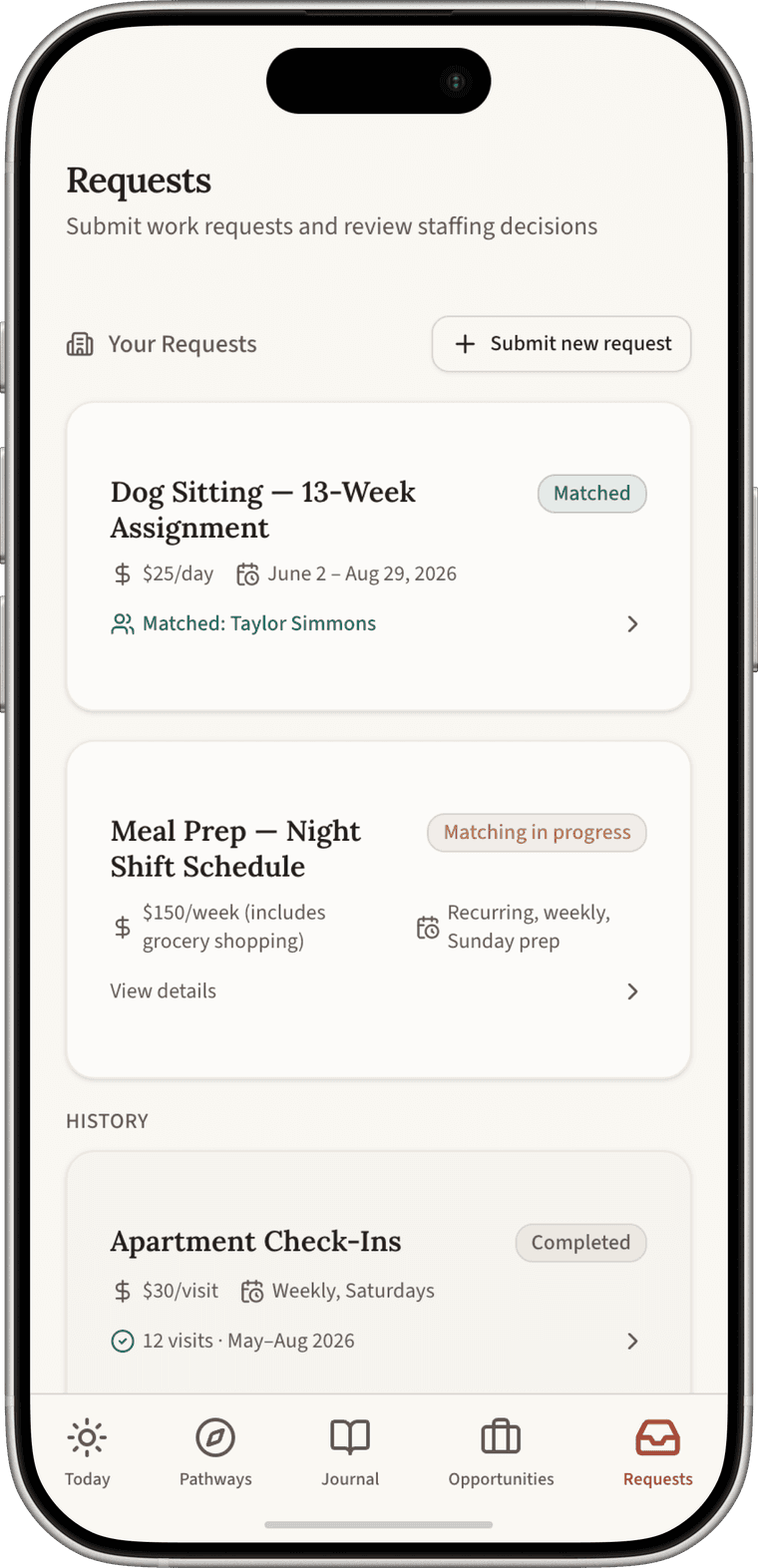
Five users, one product
01
General user
Anyone who downloads it, there for daily utility.
02
Candidate
Sees where they are, why a decision was made, and how to dispute it.
03
Worker
Sees what the platform says about them, who acted on it, and how to raise an issue.
04
Requester
Describes work to be done and is told plainly if it passes the bar.
05
Operator
Reviews decisions and handles exceptions, on the same app as everyone else.
Daily utility, a skills self-inventory, pathway exploration, and role-aware visibility into every decision.
Assignment management, time and expense, payment tracking, benefits, and reskilling delivery.
The governed data foundation.
Here is what it looks like in use. A named human reviews every consequential decision before it commits, in the system where the rules themselves live.
Shown, not claimed
 1234
1234The operator seat
Number One proposes. A named human accepts or overrides. The system never acts alone.
The confirm step
Nothing commits until a confirmation card is explicitly prepared.
The decision row
Every confirmed action lands as a queryable audit row, yes or no.
The reasoning field
A plain-language reason, written where the worker can read it.
How it holds
The system of record for the staffing lifecycle. Business rules are enforced in the database itself, through triggers, functions, controlled procedures, and tenant isolation.
It works without AI. When AI is added, it runs on top inside the same guardrails, with no privileged path. One governed contract covers a human operator, a deterministic agent, and a language-model agent alike.
Rules in code can be bypassed. In the data, they cannot.
80+
tables in the model
16
structured workflows
11
level credential engine
10
orchestrators mapped
Ten orchestrators, one operational map
The five guarantees
The same thing happens to every consequential decision, whether a human, a rule, or a model proposed it. Governance is not a separate product. It is what the database does.
01
Named human
A named human holds every decision. The system never acts alone.
02
Confirm step
An explicit confirm step. Nothing commits without an accept or override.
03
Audit trail
A durable, queryable audit trail on every decision.
04
Readable reason
A worker-readable reason for any decision that affects them.
05
Rules in the data
Rules enforced in the database, so AI cannot operate outside them.
A third path
You do not have to choose between one suite and best of breed.
Cassion sits underneath what you already run. Keep what works, replace what does not, and add the one thing no current vendor sells.
Keep
Keep what is working
Best-of-breed payroll, background check, and license verification. Cassion orchestrates them without replacing them.
Replace
Replace what is not
ATS, VMS, and CRM, replaced by lightweight Pedagogue apps on a shared governance backbone.
Add what is new.
The governance layer itself. What no current vendor sells, and what every AI deployment needs.